Archives > Volume 22 (2025) > Issue 2 > Item 07
DOI: 10.55521/10-022-207
Jennifer C. Hughes, Ph.D.
jennifer.hughes@wright.edu
Wright State University
https://orcid.org/0000-0003-0805-3441
Ray Mathew-Santhosham, Ph.D. Candidate
mathew-santhosham.1@buckeyemail.osu.edu
The Ohio State University
https://orcid.org/0009-0002-7989-2488
Stephen M. Marson, Ph.D., ACSW
smarson3@outlook.com
University of North Carolina at Pembroke (Professor Emeritus)
https://orcid.org/0000-0003-4948-5777
Kaelyn Blackburn, BSW, M.Ed.
kaelynblackburn@nelsd.org
Kenton Ridge Elementary School
https://orcid.org/0009-0008-1943-2547
International Journal of Social Work Values and Ethics • Volume 22 (2025), Issue 2,
Copyright 2025 by IFSW
This text may be freely shared among individuals, but it may not be republished in any medium without express written consent from the author and advance notification of IFSW.
Abstract
After successfully completing over 20 years of publications, a content analysis was conducted on articles that were printed in the International of Social Work Journal Values and Ethics (IJSWVE). This study employed qualitative methodologies. The findings demonstrate that published articles comply with the journal’s mission statement. General patterns demonstrate that published articles focus on theory and theoretical analysis rather than quantitative methodologies. Although quantitatively based research can be found in IJSWVE, such articles are rare. Qualitative research is more likely to be found than quantitative research. Word cloud was employed to identify dominant conceptional patterns. These include, Ethics (67), Social Work (55), Ethical Dilemma (21), Dilemma (21), Social Work Value (18) and Values (18). Bar charts were used for illustration purposes. This work can be employed as a model for conducting content analysis for other professional and academic journals.
Key words:
content analysis, word cloud, qualitative methods, longitudinal analysis, quality assessment
Introduction
Since 2004, The International Journal of Social Work Values and Ethics (IJSWVE) has provided professional and academic social workers with online open-access to peer-reviewed discussion of ethical and value-based issues. As illustrated in Table 1, IJSWVE has a history of three publishers.
| Publisher | Year | Volumes |
|---|---|---|
| White Hat Communications | 2004–12 | 1–9 |
| Association of Social Work Boards | 2013–21 | 10–17 |
| International Federation of Social Workers | 2021–present | 18– |
History of Publisher
Regarding the various publishers, the journal has always sought to advance academic and practice dialogue on the ethical implications of social problems. Their mission statement encourages submissions pertaining to ethical dilemmas in practice, theoretical evolution of social work values and principles, as well as considering ethical impacts of emerging technology in the field of social work. International authorship enables the IJSWVE to capture values and ethics across cultures and societies.
Social work as a profession is transforming on a global scale, therefore a thematic and content related analysis of the journal’s published articles could elucidate how frameworks have changed in the past as well as the field’s future trajectory. This transformation is consistent with the International Federation of Social Workers becoming the most recent publisher. Journal-wide content analyses already existing within academic literature offer insight into the trends in published works such as authorship demographics, usage of theoretical frameworks, methodology, topic, etc. When strictly pertaining to content, these analyses are often quantitative in design, however, a thematic emphasis can also open the door to qualitative measures of coded data found in the articles being studied. The broad macro perspective of an international journal enables the published articles to focus on uniting ethical issues across nations with differing laws and social structures making micro, mezzo and macro level issues highly relevant. Furthermore, the IJSWVE is unique as its content trends represent overarching concerns in the field, widening its breadth of readership and impact.
Conducting an exploratory content analysis of a single journal’s body of work has historically proven to enhance knowledge and augment development of future research (Burcu, Kurnaz, Karadeniz, Olgun & Özdağ, 2015; Eğmir, Erdem & Koçyiğit, 2017; Grise-Owens, 2002; Hays, Wood, Dahl & Kirk-Jenkins, 2016). This preliminary study sought to provide an overarching look at 20 years of publications in the IJSWVE, provide descriptive information, analyze articles in concert to the journals’ mission objectives, and contextualize article key words. This work is intended to be a starting point for a deeper exploration into publication patterns that provide greater insight for subscribers and editorial staff and guidance for scholarly journal staffs, publishers and editors.
Literature Review
Content analysis is an empirically grounded method of qualitative research which is exploratory in nature and can be used for narrative analysis (Krippendorff, 2019) as well as useful for examining volumes of published research. Past research has been conducted to uncover themes across multiple journal publications (Burcu, Kurnaz, Karadeniz, Olgun & Özdağ, 2015; Rogge & Cox 2001; Vaughn, Miles, Parent, Lee, Tilghman & Prokhorets, 2014) while others narrow the analysis and focus on the publications of one journal over a defined timeframe (Burcu, Kurnaz, Karadeniz, Olgun & Özdağ, 2015; Eğmir, Erdem and Koçyiğit, 2017; Grise-Owens, 2002; Hays, Wood, Dahl, and Kirk-Jenkins, 2016).
There are multiple examples of research conducted on the body of work from one journal. For example, Hays, Wood, Dahl, and Kirk-Jenkins (2016) engaged in a content analysis of qualitative and mixed method articles from the Journal of Counseling & Development. Focusing on articles published between 1999-2014, the research team sought to understand trends in methodological rigor over time in the field of counseling. Hays, Wood, Dahl, and Kirk-Jenkins (2016) created the initial coding frame based on review of similar content analysis studies which were subsequently reviewed. Their analysis ascertained that the majority of articles addressed one topic, often in regard to culturally based topics such as gender, race/ethnicity, and social justice issues (Hays, Wood, Dahl, and Kirk-Jenkins 2016).
Most qualitative articles analyzed were not specific in their use of a research paradigm, although research traditions included phenomenology, grounded theory, and consensual qualitative research (Hays, Wood, Dahl, and Kirk-Jenkins, 2016). Strategies most often focused on ensuring trustworthiness of claims and supporting data through ethical validation. In addition, they found a significant moderate positive relationship (r = .51, p < .001) over time between intensity of strategy and the year the article was published (Hays, Wood, Dahl, and Kirk-Jenkins, 2016). Due to the nature of the IJSWVE, this study will focus less on methodology and more on recurring topics, themes, and theoretical frameworks to capture trends in social work values over the 20 years of the journal’s publications. Despite the differences between the IJSWVE and the Journal of Counseling and Development, their method of coding provides insight into the current study’s refining of coding frames.
In another example focusing on a single journal, Grise-Owens (2002) conducted a content analysis of the 1998-1999 issues of the Journal of Social Work Education, operating under an inductive method in search of themes related to sexism, citing the exploration of curricular adherence to the National Association of Social Work (NASW) Code of Ethics as rationale for their study. To assess the systemic subtleties of sexism, Grise-Owens (2002) decided to only analyze 60 articles which were not specifically related to women’s issues while looking for articles untainted by gender bias, covering topics of gender-inequity, and using a gender theory framework. They employed a key word analysis over multiple readings to address research questions regarding the use of gender-based dimensions within an analysis framework (Grise-Owens, 2002). Grise-Owens’ topical content analysis poses relevance to the current study; however, their small data set suggests the time-consuming method of keywords in context would not be feasible for 20 years of publication. The following themes emerged after Grise-Owens’s (2002) analysis:
- discrepancies in pronoun usage,
- sexist language,
- inconsistent attention to gender as a variable,
- inattention to gender as a theoretical framework.
Topical content in the analysis of the IJSWVE will be more broadly defined to increase the practicality of reviewing a large number of articles with multiple reviewers.
Burcu, Kurnaz, Karadeniz, Olgun and Özdağ (2015) is an example of an evaluation of 37 publication years within a single journal. The research team developed 51 topical codes derived under each decade with developed sub-categories to reflect how social problems changed over time. In addition, four research method category codes were established as well as six country codes which included ‘USA,’ ‘comparable to USA,’ ‘cross-national,’ ‘no country specified,’ ‘multiple European countries.’ Lastly, 65 codes were developed to designate theories to explain social problems depicted in journal articles.
The central focus of Eğmir, Erdem and Koçyiğit (2017) includes the employment of qualitative methodologies to demonstrate research trends in the field of education. Paralleling our study, they conducted a content analysis which resulted in frequencies and percentages of publication trends. Although the journal is international with publications from a wide range of countries (n=35), the researchers found a commonality of sampling techniques, research methods, and statistical procedures. These authors demonstrated that the vast majority of their publications were categorized as quantitative (n=500).
Other research examined specific information across a variety of journals. For instance, Barusch, Gringeri and George (2011) conducted a content analysis of 100 social work articles across 27 social work academic journals to look at rigor in qualitative research utilizing a developed standardized template. Nineteen qualitative rigor techniques were identified and coded and they acknowledged five strategies most frequently used among all.
The work of Rogge and Cox (2001) provides another example of analysis of content across multiple journals looking for the person-in-environment perspective among peer reviewed social work journals. This research team utilized data from the Social Work Abstracts database to provide a computer assisted content analysis of 7,941 articles published from 1987-1996. Their study utilized keywords which were subsequently categorized. These datasets were processed through multiple software programs to ascertain frequency counts, create a structure of linking articles, develop keyword databases, and organize interrater reliability and coding measures (Rogge & Cox 2001).
An example of conducting a content analysis across multiple journals is seen in the work of Vaughn, Miles, Parent, Lee, Tilghman and Prokhorets (2014). Employing PsycINFO as their sampling frame, they examined strengths-based themes that were addressed in LGBT positive psychology literature between 1973-2011. Unlike other studies examined in this review of literature, these researchers had a specific predetermined focus that exclusively addressed how the impact of strengths-based themes could influence public attitudes, public policy and legal statutes.
Due to the massive proliferation of predatory journals, a statistical analysis of anonymous reviewer reliability was conducted by Marson and Ellis (2021) for the International Journal of Social Work Values and Ethics. The mission of this research project was to assure stakeholders that the journal’s manuscript screening process was transparent and fair. Based on a sample of 246 editorial reviews, interrater correlations were calculated and determined r’s that ranged from 0.749 to 0.680 (p < .000). Although considered to be a moderate degree of correlation, these results were considerably higher than the range found in a 2008 review by Bornmann (as cited in Marson and Ellis, 2021) which produced r’s from 0.2 to 0.4.
Another technique exists allowing researchers to conduct a content analysis using a spreadsheet. Bree and Gallagher (2016) used an inductive approach to analyze a qualitative data set of participant comments compiled during focus group interviews. For data analysis purposes, the comments were moved to a spreadsheet wherein the dataset was placed into one column. Their application is an example of the use of spreadsheets. Bree and Gallagher (2016) provide direction in how to effectively analyze the coded data set utilizing a software package.
Burcu, Kurnaz, Karadeniz, Olgun and Özdağ (2015) offered a follow-up content analysis from an earlier study examining articles from Social Problems between1952 to 1975. They replicated the publication for articles published between 1976 to 2012. However, unlike the earlier publication, they excluded all articles that lacked a sociological focus. Their objective was to identify specific social problems that dominated the journal, trends of social problems topics, country of origin in which a social problem is addressed, research methods that were used in the studies, and theoretical explanations.
Barusch, Gringeri and George (2011) conducted a similar qualitative study. They completed a content analysis on the various research strategies employed in 2005 Journal Citation Reports: Science and Social Sciences Edition. In the end, they ranked and ordered methodologies to illustrate the pattern social work researchers are most likely to employ.
Methods
Word cloud presents an option for analysis and assessment in geographical form (DePaolo & Wilkinson 2014). Word cloud software digitally assesses word frequency. There are several online word cloud generators available without charge (Sellars, Sharrod, & Chappal-Aiken, 2018). Word clouds are useful to present visual information to an audience particularly as an exploratory qualitative data analysis (Cidell, 2010).
The research team employed a spreadsheet to input data from all articles in the 20 years of the journal. Once all 20 years of journal articles were coded, article key words were put into a word cloud image for each of the 20 years and again for all 20 years combined for a visual representation of most frequently used words. Following that, a worksheet was developed for researchers to analyze each article’s fit within the 5 identified mission objectives of the journal found on the journal’s home page (International Journal of Social Work Values and Ethics, 2023). Those are as follows:
- Development of models for analyzing and resolving values and ethical dilemmas
- Discussion of ethical and values dilemmas related to development of new technologies
- Research studies on the influence of values and ethics in social work practice decision-making and in agency program development
- Examples of good practice that clearly highlight ethical and values considerations
- Theoretical articles that explain the origin, development, and evolution of social work values and ethics.
Years of the journal were divided among the research team and cross-checking measures were employed to improve reliability and provide interrater reliability.
Results
A standardized template was developed by the research team to evaluate data including categorized strategies. The notes section of the template was used for reviewers to document their rationale for grouping. To assess inter-rater reliability, research team members collectively decided that the research assistants would each review 25% of every other year. One reviewed all even years, starting with 25% of 2022 while the other covered the odd years starting with 25% of 2021. This pattern continued until all years were completed. Figure 2 (discussed in more detail later) illustrates the reliability assessment of the reviewers categorization process.
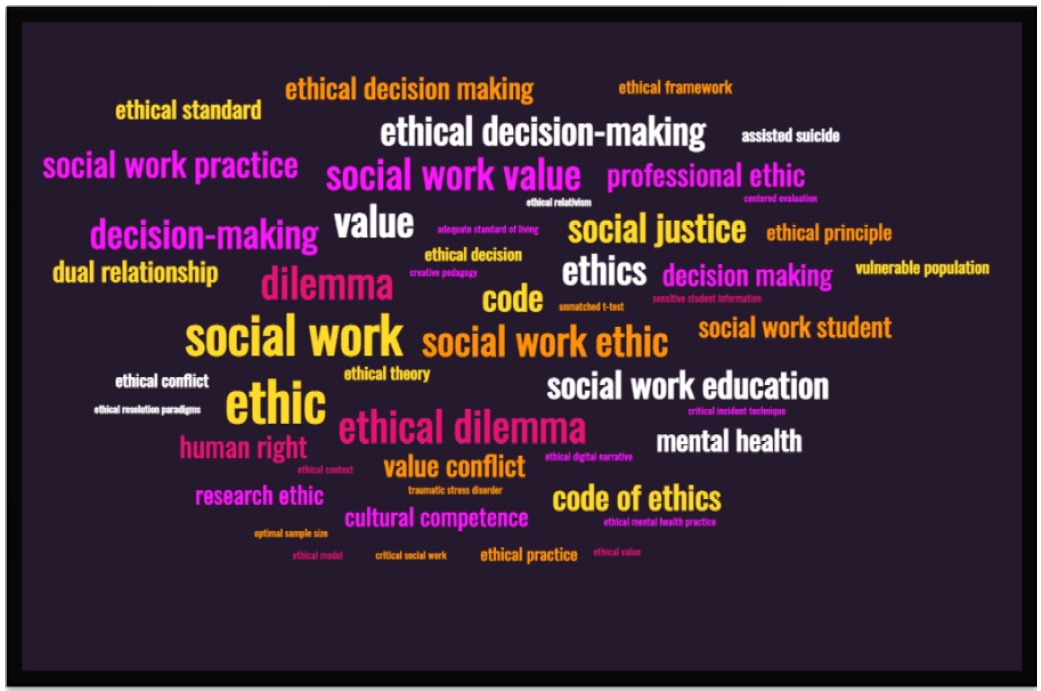
Figure 1 depicts a word cloud of the key terms found in the reviewed articles. Note that the key words which were analyzed were restricted to research articles, excluding editorials, opinion, letters to the editor, theoretical articles, etc. This visual tool provides valuable insights as the font size of each word or phrase reflects the frequency of use in reviewed articles (DePaolo & Wilkinson, 2014). Hence, the largest words or phrases were present in the key terms more than the smallest words or phrases as illustrated in Figure 1. Investigators fed a list of key terms from each article under analysis into software which produced the word cloud below based on frequency of occurrence (DePaolo & Wilkinson, 2014). The colors represented within Figure 1 exist for aesthetic purposes and do not indicate a qualitative or statistical interpretation.
Findings from the word cloud suggest the most common article themes in the IJSWVE across 20 years of publication were as follows:
- Ethics (67)
- Social Work (55)
- Ethical Dilemma (21)
- Dilemma (21)
- Social Work Values (18)
- Values (18)
Within the word cloud, many words and phrases are repeated in various forms of the concept. The repetitive concepts reflect the scope of the journal and consistent themes across diverse articles regardless of the specific topic.
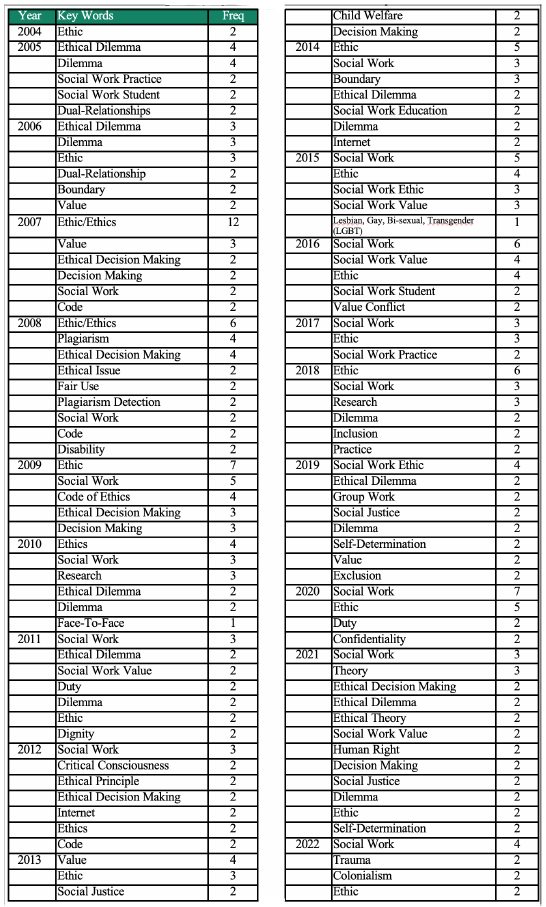
By assessing each year of publication in Table 2, the ethical concerns relevant to the field of social work at that time become evident. Moreover, the sheer number of key words increasing each year also reflects the journal’s growth. Ethical and value-based decision making from an international perspective shifts in relation to changes in technology, codes of ethics, social policy, and social justice movements.
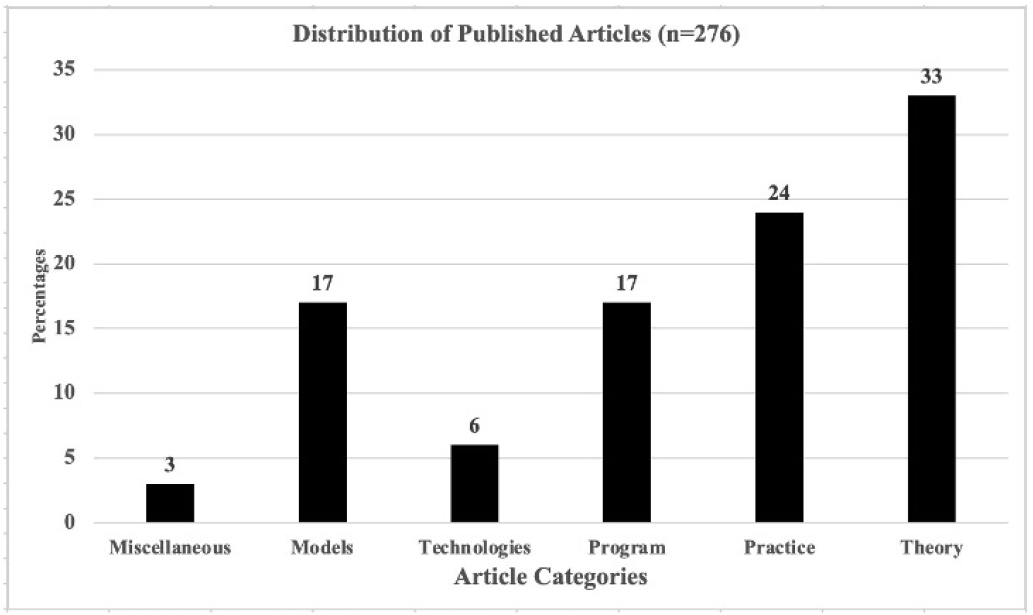
In order to determine if the journal is compliant with the mission statement, it is necessary to categorize the manuscripts that were eventually published. With n=276, an examination of each article resulted in five categories. Seven (3%) of the articles could not be categorized within the established pattern. These were categorized as “miscellaneous” in Figure 2. As acknowledged in Figure 2, the greatest proportion of published articles falls within the category of theory. In a cursory assessment of Ethics and Social Welfare and Journal of Social Welfare and Human Rights (two other journals focusing on social work values and ethics), we notice the domination of articles focusing on theory rather than hypothesis testing. There is a commonality among values and ethics journals in social work. Most importantly, the data in Figure 2 unambiguously demonstrates that content in the published articles is congruent to the journal’s mission statement.
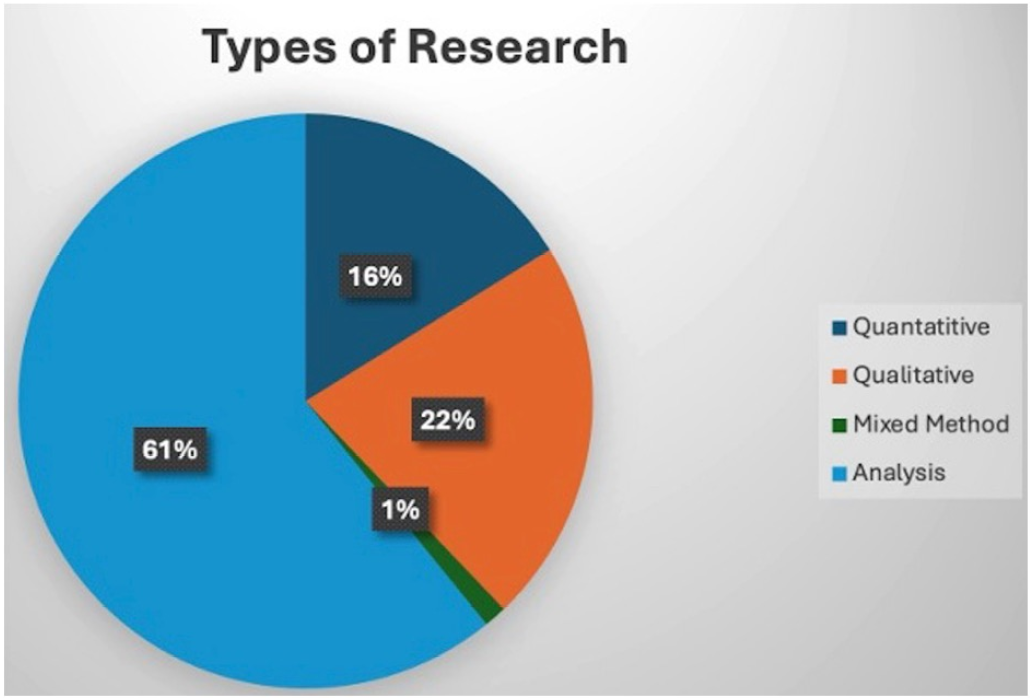
Using the same data set, we examined and assessed the type of research paradigm that dominated for each publication. The findings were not surprising and were consistent with the journal’s mission statement: Unlike most journals, the International Journal of Social Work Values and Ethics is not dominated by articles that statistically test a hypothesis. As illustrated in Figure 3, only 16% of the articles can be categorized as quantitative. This does not necessarily mean that a hypothesis was tested, but, more likely, that descriptive statistics were the centerpiece. Critically, the data within Figure 3 demonstrate that the primary methodology employed is analysis. More specifically, the majority of the articles review values and/or ethics in the context of specific values or ethics theories. Alternatively, well established theories (outside of the realm of values and/or ethics) are employed as a framework to understand social work practice. Critically to note, an intensive review of Figures 2 and 3 demonstrate unambiguous congruency.
There is a wide range of dimensions on how content analysis can assess published articles that comply with the journal’s mission statement. Many of these dimensions might be considered of secondary interest to some readers. On the other hand, if a reader is interested in using our research as a model for advancing and/or replicating other research, the appendices could offer a considerable amount of guidance. Our appendices include issues related to:
- overall compliance to the mission statement
- how qualitative research complies with the mission statement
- how quantitative research complies with the mission statement
- how mixed methods comply with the mission statement
- how theoretical articles comply with the journal’s mission statement.
Each of these dimensions are addressed using bar charts.
Discussion
In congruence with the IJSWVE scope and mission, the key words which appeared most frequently in the journal surround ethical and value-based decision making in the field of social work. The IJSWVE achieved consistency over 20 years of international scholarly contributions, suggesting the editorial board maintained a strong sense of the journal’s scope despite changes in the profession and the editorial board membership.
When considering each year of publications as segments of an evolving narrative, the key words shed light on the quandaries in the professional community which arose in response to the changing social context. Most key words from each publication year reflect the consistency mentioned above; however, certain key words were specific to time frames. For example, the “dual relationships” key word only appeared in 2005 and 2006. The year 2008 is the only year that includes key words regarding “plagiarism”. In 2010, the key word “face-to-face” reflects emerging technology which enables social work students to learn about ethics on online courses. “Critical consciousness” and “child welfare” only appear as key words in 2012 and 2013, respectively. “Internet” emerges as a key word in 2012 and 2014 as the rising popularity of social media posed ethical concerns regarding virtual mental health treatment and online education programs. Brezinski, Tabakam, and Ploub (2024) noted in a study of students in a Master of Clinical Counseling program at Bellevue University that an over-reliance on information and communication technologies may lead to ineffective clinical practice and insufficient academic support.
The key words in 2011 uniquely cover the topics of “professional duty” and the “inherent dignity of a person”, both integral aspects of the National Association of Social Workers’ Code of Ethics. Moreover, professional standards of “confidentiality” and “duty” are also present in 2020. The key words “social work education” emerge in 2014, and “social work students” are mentioned again in 2016.
Over the 20 years of publication, the key words “Lesbian, Gay, Bi-sexual, and Transgender” only appears in a research article once in 2015. In 2015, the social work community and public grew in awareness of LGBTQ+ issues as their rights began to expand, specifically in the United States (Field, 2018). Research about this vulnerable population continues to lag across the field of social work, especially in the international context. Key words reflecting social justice issues begin to surface more often after 2015. The key words “inclusion” and “exclusion” arise in 2018 and 2019 respectively. “Self-determination” comes up in 2019 and 2021. The publications in 2021 also included “human rights” as key words. Lastly, the key words “trauma” and “colonialism” make their first appearance in 2022.
Conclusion
The content analysis demonstrates that the International Journal of Social Work Values and Ethics unambiguously embraces its mission statement. The journal’s mission statement was analyzed in various qualitative methodologies including word cloud, bar charts and word analysis. All of these methodologies confirm that the journal has maintained focus on the mission statements that were composed by the first editorial board in 2002.
If the articles reflect social work practice and education interests during the time of publication, the journal identifies dominant themes found within the interest of social workers. Areas of interest have been acknowledged and linked to particular time periods. One can reasonably assume that an ethical or value issue (like “dual relationships”) was envisioned as problematic or a topic that was perplexing within academic social work courses. After the subject was thoroughly analyzed and discussed among social workers, the outcome of these inquiries became instilled within budding social workers and advanced practitioners. Once that occurred, the issue became a mainstay for social work practice and education. Simply stated, the topic moved from cutting edge to public domain knowledge.
Although we acknowledge that publications with an international focus have existed since the journal’s inception (see special issue on international social work, volume 6, number 2, 2009), emphasis on the use of the Global Social Work Statement of Ethical Principles did not appear until the International Federation of Social Workers became the publisher in 2021. Prior to 2021, the NASW Code of Ethics was employed as a springboard for discussions and analysis of social work practice and education issues. Currently, the editorial board directs authors to use the Global Social Work Statement of Ethical Principles as a framework for analysis.
References
Barusch, A., Gringeri, C., & George, M. (2011). Rigor in qualitative social work research: A review of strategies used in published articles. Social Work Research, 35(1), 11–19. https://doi-org.proxy.lib.ohio-state.edu/10.1093/swr/35.1.11
Bree, R., & Gallagher, G. (2016). Using Microsoft Excel to code and thematically analyze qualitative data: A simple, cost-effective approach. The All-Ireland Journal of Teaching & Learning in Higher Education, 8(2), 2811-28114. https://ojs.aishe.org/index.php/aishe-j/issue/view/23
Brezinski, K., Tabakam, T., & Ploub, H. (2024). Balancing technology and mental health: A study of online education’s influence on graduate student achievement. Online Journal of Distance Learning Administration, 27(3).
https://ojdla.com/articles/balancing-technology-and-mental-health-a-study-of-online-educations-influence-on-graduate-student-achievement
Burcu, E., Kurnaz, Z., Karadeniz, O., Olgun, C. & Özdağ, U. (2015). An analysis of ‘Social Problem Topics’ pertaining to the articles published in Social Problems between the years 1976-2012. Istanbul Journal of Sociological Studies, 0(50), 47-86. Retrieved from https://dergipark.org.tr/en/pub/iusoskon/issue/9554/119335
Cidell, J. (2010). Content clouds as exploratory qualitative data analysis. Area, 42(4), 514-523. doi:10.1111/j/1475-4762.2010.00952.x
DePaolo, C., & Wilkinson, K. (2014) Get your heads into the clouds: Using word clouds for analyzing qualitative assessment data. Tech Trends, 58(3), 38-44.
Eğmir, E., Erdem, C., & Koçyiğit, M. (2017). Trends in educational research: A content Analysis of the studies published in “International Journal of Instruction.” International Journal of Instruction, 10(3), 277–294. Retrieved from https://www.researchgate.net/publication/318115182_Trends_in_Educational_Research
Field, N. (2018). ‘They’ve lost that wounded look’: Stonewall and the struggle for LGBT+ rights. Critical and Radical Social Work, 6(1), 35–50. https://doi.org/10.1332/204986018X15199226335132
Grise-Owens, E. (2002). Sexism and the social work curriculum: A content analysis of the “Journal of Social Work Education”. Journal of Women & Social Work, 17(2), 147–167. Retrieved from https://doi-org.proxy.lib.ohio-state.edu/10.1177/088610990201700202
Hays, D. G., Wood, C., Dahl, H., & Kirk-Jenkins, A. (2016). Methodological rigor in Journal of Counseling & Development qualitative research articles: A 15-Year review. Journal of Counseling & Development, 94(2), 172–183. https://doi.org/10.1002/jcad.12074
International Journal of Social Work Values and Ethics (2023, February 3) https://jswve.org
Krippendorff, K. (2019). Content analysis an introduction to its methodology (4th ed.). Sage.
Marson, S. (2024). Authors needing reprints. International Journal of Social Work Values and Ethics, 21(2), 38–39. https://doi.org/10.55521/10-021-204
Marson, S. M., & Lillis, J. P. (2021). A case study for the interrater reliability of journal references. Research on Social Work Practice, 32(2), 238–244. https://doi-org.proxy.lib.ohio-state.edu/10.1177/10497315211052456
Rogge, M. E., & Cox, M. E. (2001). The person-in-environment perspective in social work journals: A computer-assisted content analysis. Journal of Social Service Research, 28(2), 47–68. https://doi-org.proxy.lib.ohio-state.edu/10.1300/J079v28n02_03
Sellars, B. B., Sharrod, D., R., & Chappal-Aiken, L. (2018). Using word clouds to analyze qualitative data in clinical settings. Nursing Management, 49(10), 51-51. doi-10.1097/01.NUMA.00005462077.70574c3
Vaughn, M.D., Miles, J., Parent, M.C., Lee, H.S., Tilghman, J.D., & Prokhorets, S. (2014). A content analysis of LGBT-Themed positive psychology articles. Psychology of Sexual Orientation and Gender Diversity, 1(4), 313-324. https://doi-org.ezproxy.libraries.wright.edu/10.1037/sgd0000060
Appendices
For all of the bar charts illustrated in these appendices, the mission statements appear on the horizontal axis at the bottom. Since each mission statement constitutes a full sentence, it is not possible to include the entire mission statement on the chart. Immediately below, one can read each mission statement. Adjacent to the mission statement on the left is a summary which will be used in the horizontal axis for each bar chart.
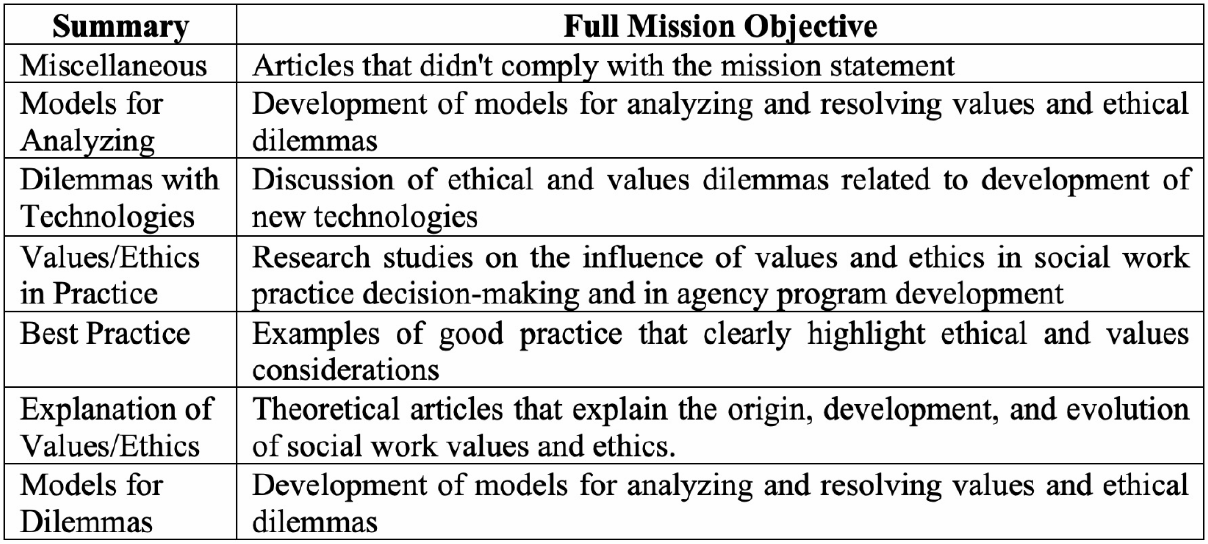
Appendix A
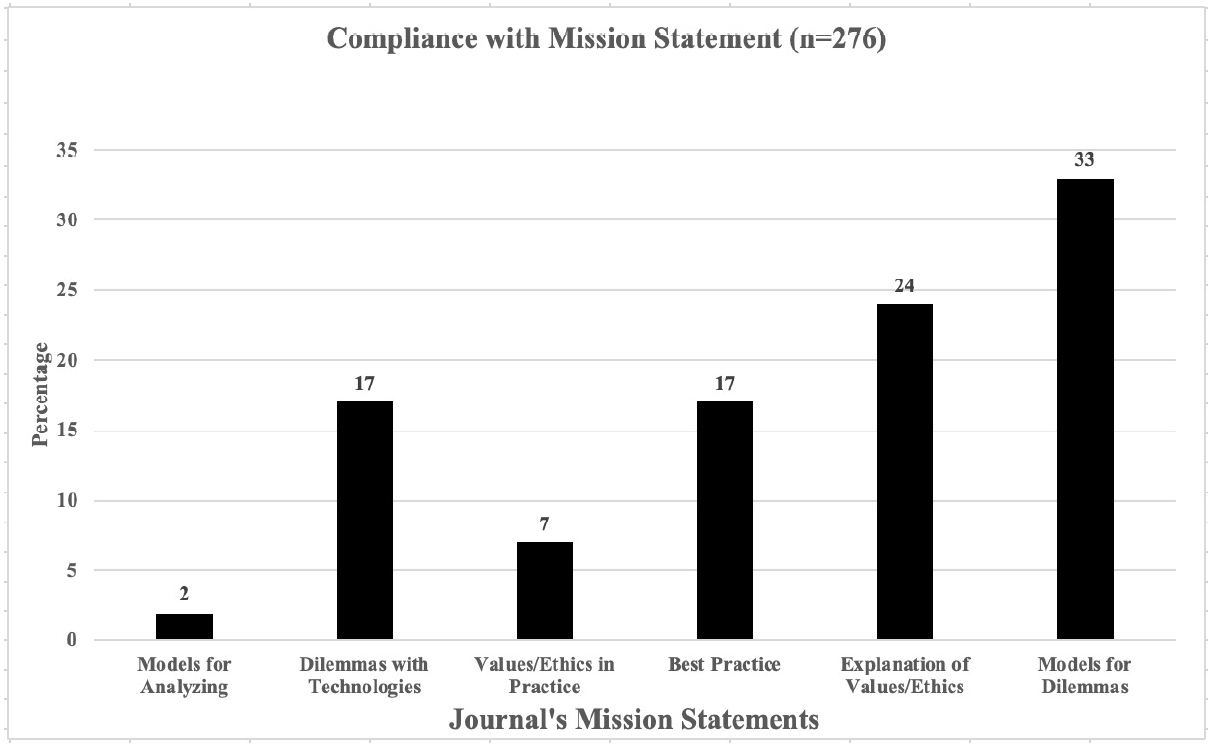
Appendix A includes a qualitative assessment of each published article. Although we were expecting some articles would not fit into any of the mission statements, all of them did. Within this analysis one anomaly was uncovered. Although each article complied with at least one of the journal’s mission statements, 39 articles included a focus of two or more. The chart in Appendix A, does not account for articles that focused on multiple mission statements. Rather, our analysis categorized articles that had the major focus of the particular mission statement.
Appendix B
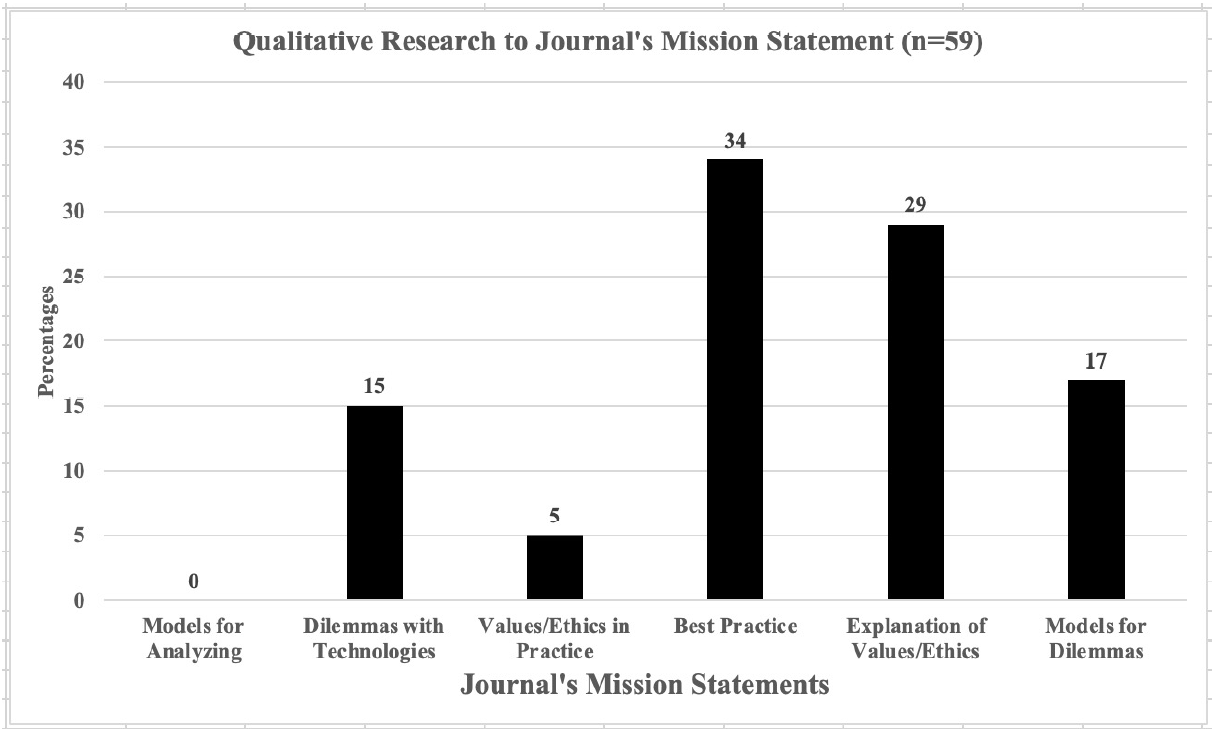
Appendix B includes an assessment of how qualitative research articles matched the mission statements. The data is contrary to our preconceived expectations. We expected that qualitative methodologies would dominate “Explanation of Values Ethics.” Instead, we find that qualitative methodologies were employed to examine and/or assess “Best Practice” strategies.
Appendix C
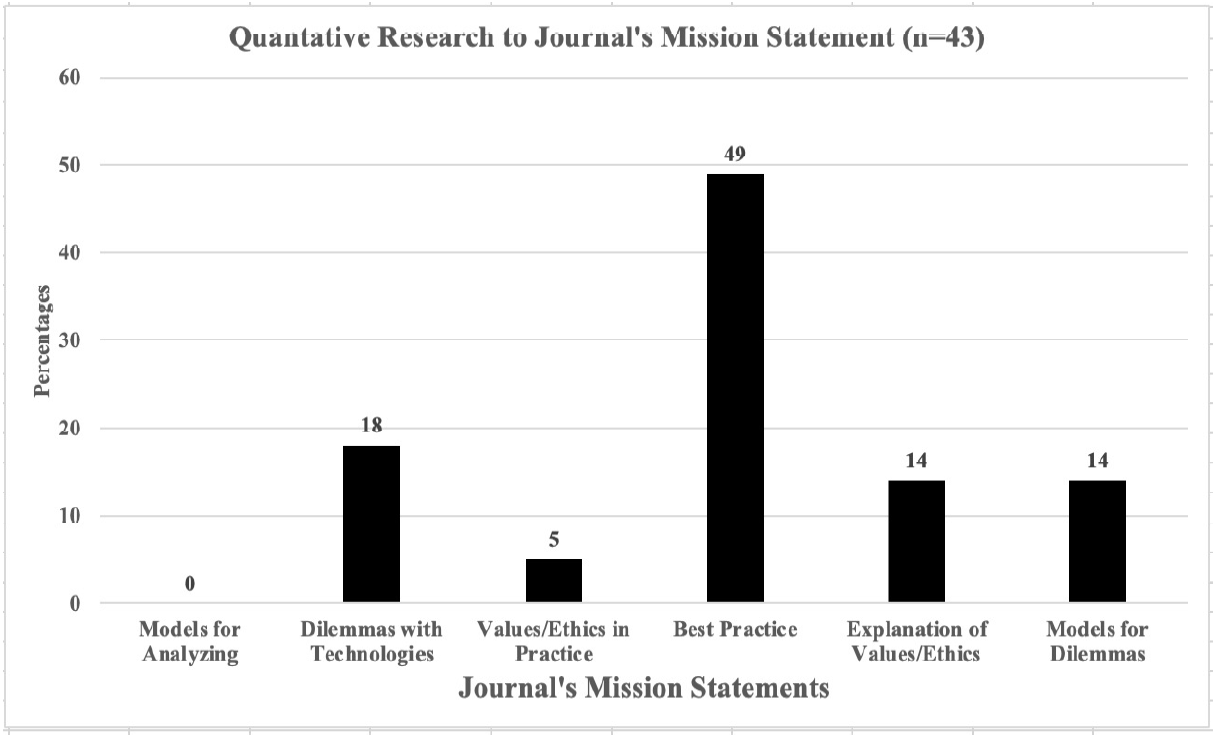
Several issues are immediately apparent within the Appendix C. First, in contrasting Appendix B with Appendix C it is immediately apparent that qualitative research dominates ethical analysis when compared to quantitative research. Secondly, both qualitative and quantitative methodologies focused primarily on issues of “Best Practice.”
Appendix D
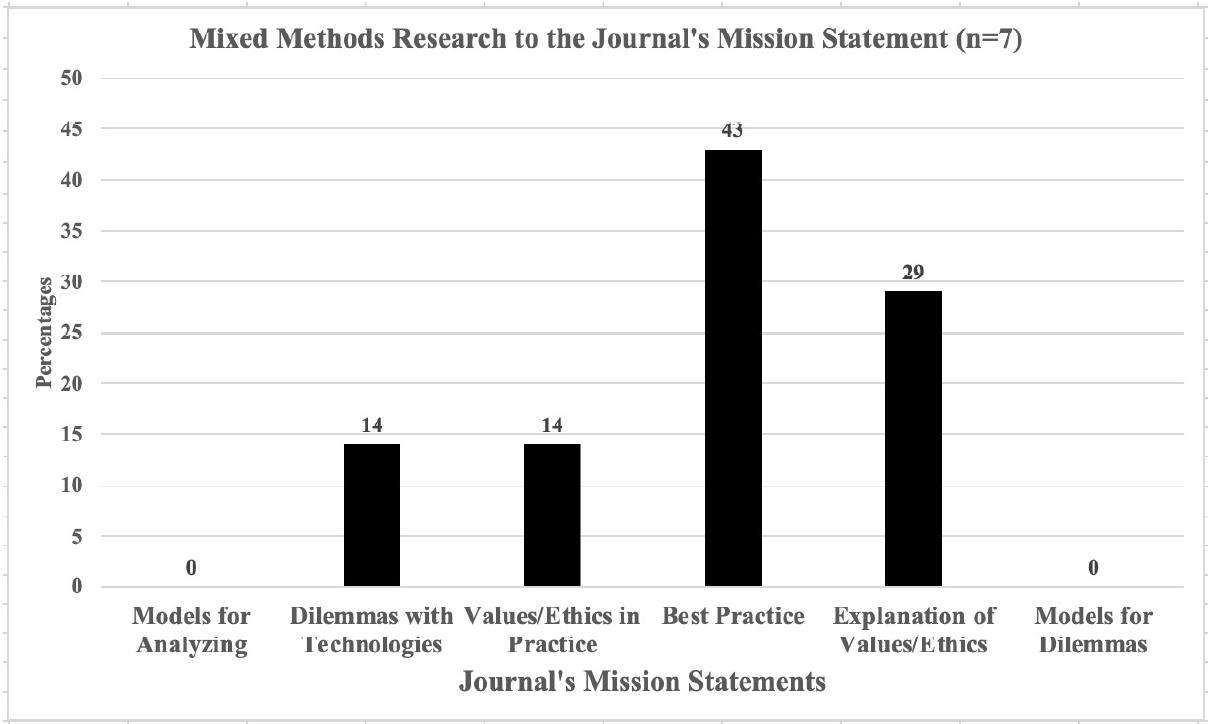
With n=7, as illustrated in Appendix D, mixed methods research is the least employed methodology published in the journal. However, like qualitative and quantitative methodologies, mixed methods were most commonly employed for issues of “Best Practice.”
Appendix E
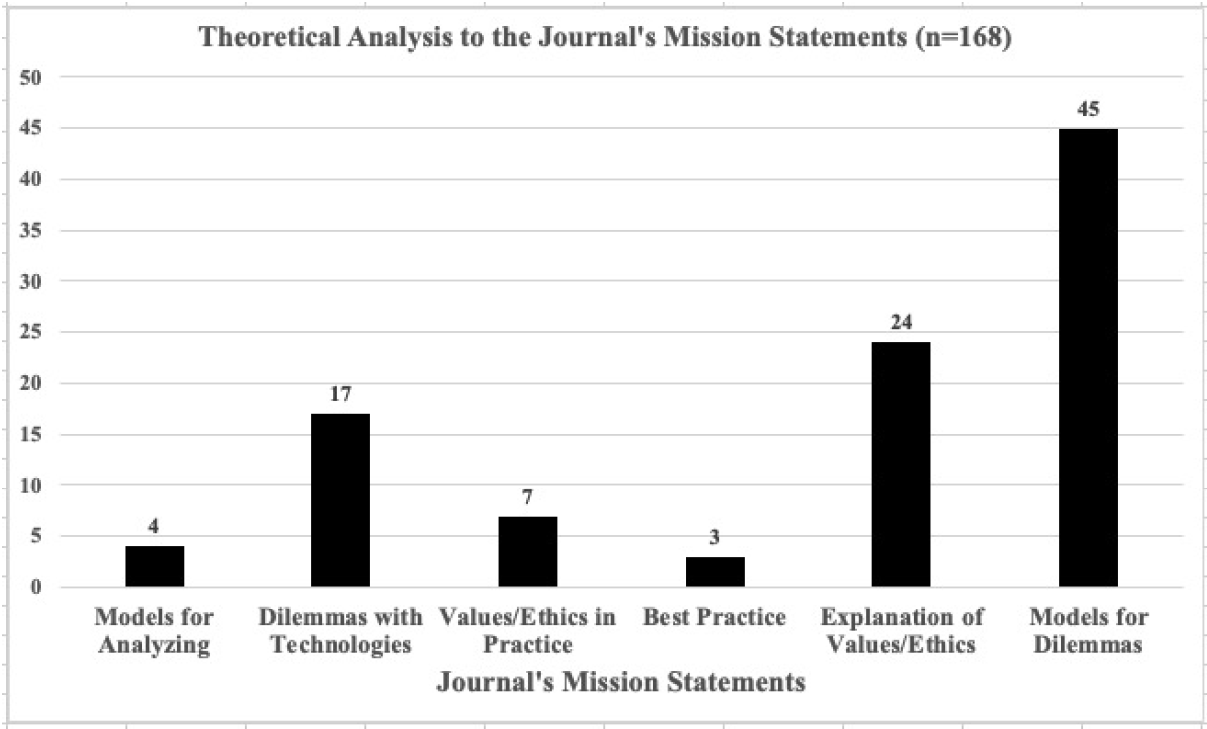
Appendix E focuses on articles that offer a theoretical presentation. Unlike qualitative, quantitative, and mixed methods methodologies, the issue of “Best Practice” generated the least proportion of focus. In addition, with n=168, theoretical articles outnumber the sum of all the methodological papers put together.